
prototype development and validation
Work closely with your team to turn complex motor requirements into functional prototypes. Combining precision component manufacturing, motor assembly, and application-specific testing, our collaborative development process helps evaluate design feasibility, refine critical interfaces, and validate performance before production scale-up.
15+
Year Experience
10,000+
Samples Manufactured
50+
Engineering Projects
4–8
Weeks Typical Prototype Lead Time
8+
Test Categories
Precision Prototyping
By combining design-for-manufacturability reviews, prototype testing, and engineering refinement, we help identify potential issues early, optimize critical design decisions, and facilitate a smoother transition from validated prototypes to production.
Precision Motor and Component Prototyping
· Custom motor prototype development
· R&D and experimental prototype builds
· Laser-cut stator laminations
· Hand-wound stator coils
· Rotor and miscellaneous component machining
· Custom shaft, end-cap and housing machining
· Permanent magnet machining and grinding, subject to material and process feasibility
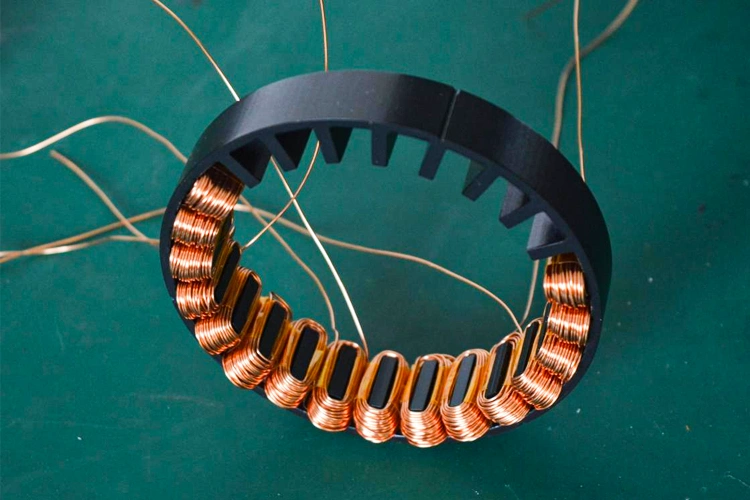
Assembly Integration & Process Development
· Shaft and bearing selection and configuration
· Mating component fit checks
· Rotor, stator and mechanical assembly integration
· Manufacturing process simulation
· Prototype tooling developm ent and refinement

Prototype Testing & Performance Validation
· Custom motor test platforms and dynamometer test stands
· Speed–torque and output power testing
· Efficiency mapping
· Temperature-rise and thermal stress testing

Engineering Feedback & Design Iteration
Build. Test. Learn. Refine.
Prototype testing provides practical feedback on how the design performs under defined conditions. Where results differ from target specifications, engineering analysis can help identify potential causes and guide the next design iteration.
What You Receive
Functional Prototype
· A custom-built motor prototype or specified component assembly based on your agreed design requirements.
· Complete prototypes or individual assemblies
· Specified motor components and mechanical interfaces
· Assembly and fit verification, where applicable
Test Data & Validation Results
· Documented test results to help evaluate prototype performance
· Torque-speed, power, and electrical measurements.
· Efficiency and thermal results
· Performance gaps and validation findings
Engineering Documentation
· Technical records to support design review, further development, and manufacturing preparation.
· Relevant 2D drawings and 3D CAD files
· Key component specifications and BOM
· Assembly details and test documentation
Engineering Feedback & Next Steps
· Practical recommendations based on prototype development and validation findings.
· Identified design or integration issues
· Recommended design refinements
· Suggested next steps for further validation and production preparation
1. Can you manufacture individual motor components without building a complete motor?
Yes. SOZN can assess requests for individual components or assemblies. Feasibility depends on the design, material, tolerances, and required manufacturing processes.
2. What information do you need to start a motor prototype project?
Ideally, provide your 2D drawings or 3D CAD files, target torque and speed, voltage, power requirements, operating environment, dimensional constraints, and expected prototype quantity. If the design is still at the concept stage, we can review the available requirements and identify the information needed to proceed.
3. What motor testing and validation can you support?
Depending on the project requirements and available test facilities, validation may include winding resistance, insulation resistance and hipot testing, back-EMF measurement, torque–speed and power testing, efficiency mapping, temperature-rise testing, and vibration or noise assessment. Specialized testing may be arranged through external laboratories where appropriate.
4. What happens if the prototype does not meet the target performance?
Test results can be reviewed against the agreed performance targets to identify potential design, component, assembly, or operating-condition issues. Based on the findings, we can discuss design refinements, additional testing, or another prototype iteration according to the project scope.
5. Can you support the transition from prototype to production?
Yes. Prototype development can help assess component fit, assembly feasibility, manufacturing processes, and performance requirements before production scale-up. The next stage can include design refinement and manufacturing preparation, subject to project requirements and production feasibility.
Have a Motor Prototype
Project in Mind?
Share your drawings, performance targets, or initial concept with our engineering team. We’ll review your requirements and discuss a suitable development and validation approach.